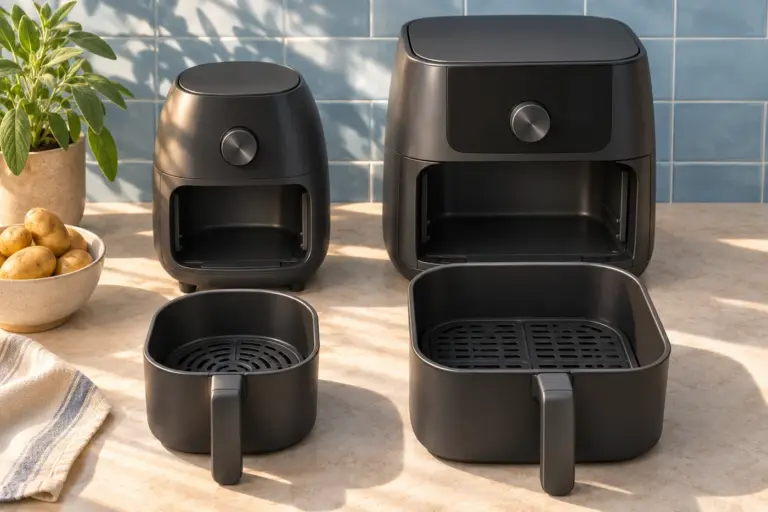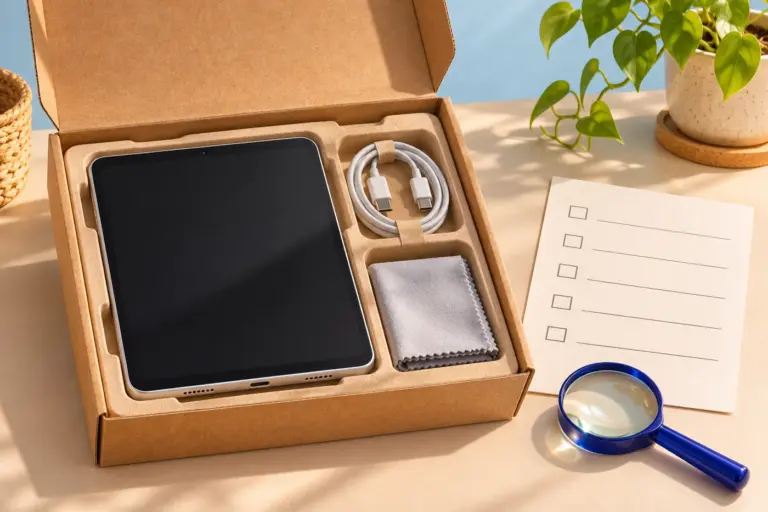
Write down one ordinary meal, check how its shape fits the basket, and measure the working space around the appliance. Quarts alone are not a complete buying rule.
Buying guide · No hands-on test claimedThe easiest air fryer to recommend is the one in an empty showroom kitchen. Your kitchen has a sink, a cutting board, outlets, overhead cabinets and a dinner schedule. That context should decide what size earns a place on the counter.
This is a planning guide. It does not prescribe a serving capacity for every household or claim cooking tests that we have not performed.
Begin with one ordinary meal.
Write down a meal you make often and what part of it would go in the air fryer. Specify how much needs to be ready together. A machine intended for one component of dinner has a different job from one expected to handle the whole meal.
Next, decide what you are willing to do twice. A second batch may be fine for a relaxed snack. It may be inconvenient if everyone needs dinner at the same time. This is a routine question rather than a universal rule about the number of people in a home.
Ask for the dimensions that answer your question.
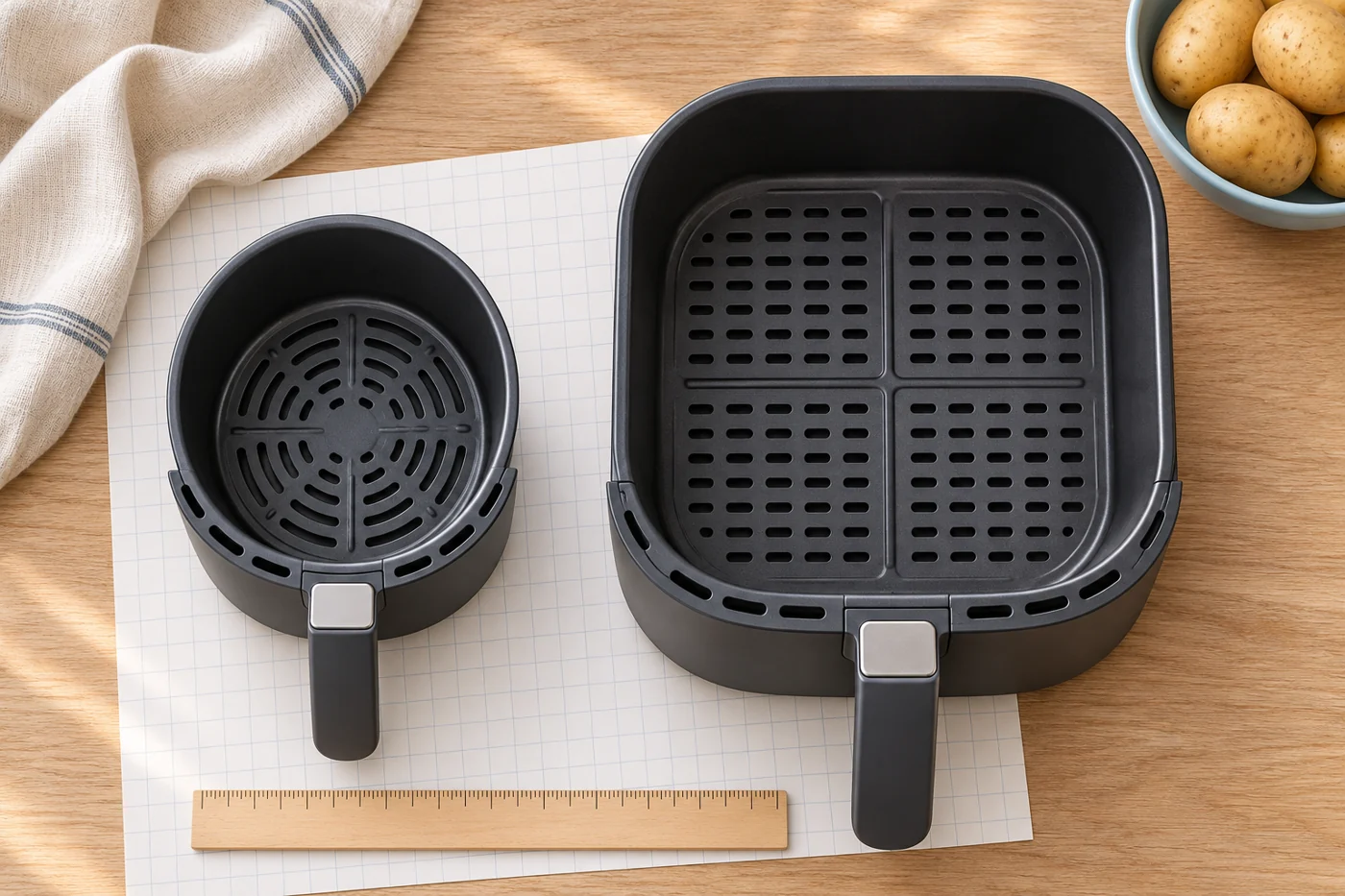
Published basket volume is helpful for comparing stated capacity, but it does not show the shape of the usable floor. Exterior dimensions answer another question: how much space the appliance occupies before you open it.
Draw two outlines on paper: the exterior footprint and, when available, the usable basket floor. Put the first on your counter. Use the second to think about the shape of the food you want to arrange. Do not substitute this drawing for the loading instructions in the product manual.
Give the drawer somewhere to go.
Picture the movement from cooking to serving to washing. Where will the drawer open? Where will a hot basket rest? Will the parts fit your sink and drying area? A good answer should work in your normal kitchen arrangement, rather than requiring a complete rearrangement for every meal.
Read the exact model’s safety instructions for clearance, electrical use and suitable surfaces. A neat visual fit is not evidence that an operating location is permitted.
Use a decision sheet instead of a size slogan.
- Normal job: what food, and how much, must be ready at once?
- Available workspace: what remains after following the manual’s clearances?
- Handling: can the basket move comfortably between the appliance, serving area and sink?
- Batch tolerance: when would repeating the cooking step become annoying?
- Return terms: can you resolve an unexpected fit problem after delivery?
If a listing leaves a decisive measurement out, ask before ordering. A smaller appliance with a workable layout can be a better purchase than a larger one you resent storing. Equally, buying too small to save counter space can add a routine you did not want.
How we use this in a real comparison.
Our AF101 and TurboBlaze comparison starts from their different stated volumes. It then asks what those numbers do—and do not—establish. We do not convert quart capacity into an untested promise about how many dinners each will cook.
Take the same approach to any shortlist: confirm the specification, translate it into your own use case, and leave unmeasured performance questions open. A purchase that suits your routine is more useful than a larger number on the box.
Sources & research notes
Original buying worksheet. Manufacturer pages illustrate which specifications are available; we have not tested cooking capacity or serving counts. Follow the exact appliance’s manual for all operating and safety requirements.
- Ninja AF101 — example of published capacity information ↗
- COSORI TurboBlaze — example of published dimensions ↗
Source check: 2026-11-12. Prices, availability and seller policies can change. Read our methodology.
Useful for your next purchase?